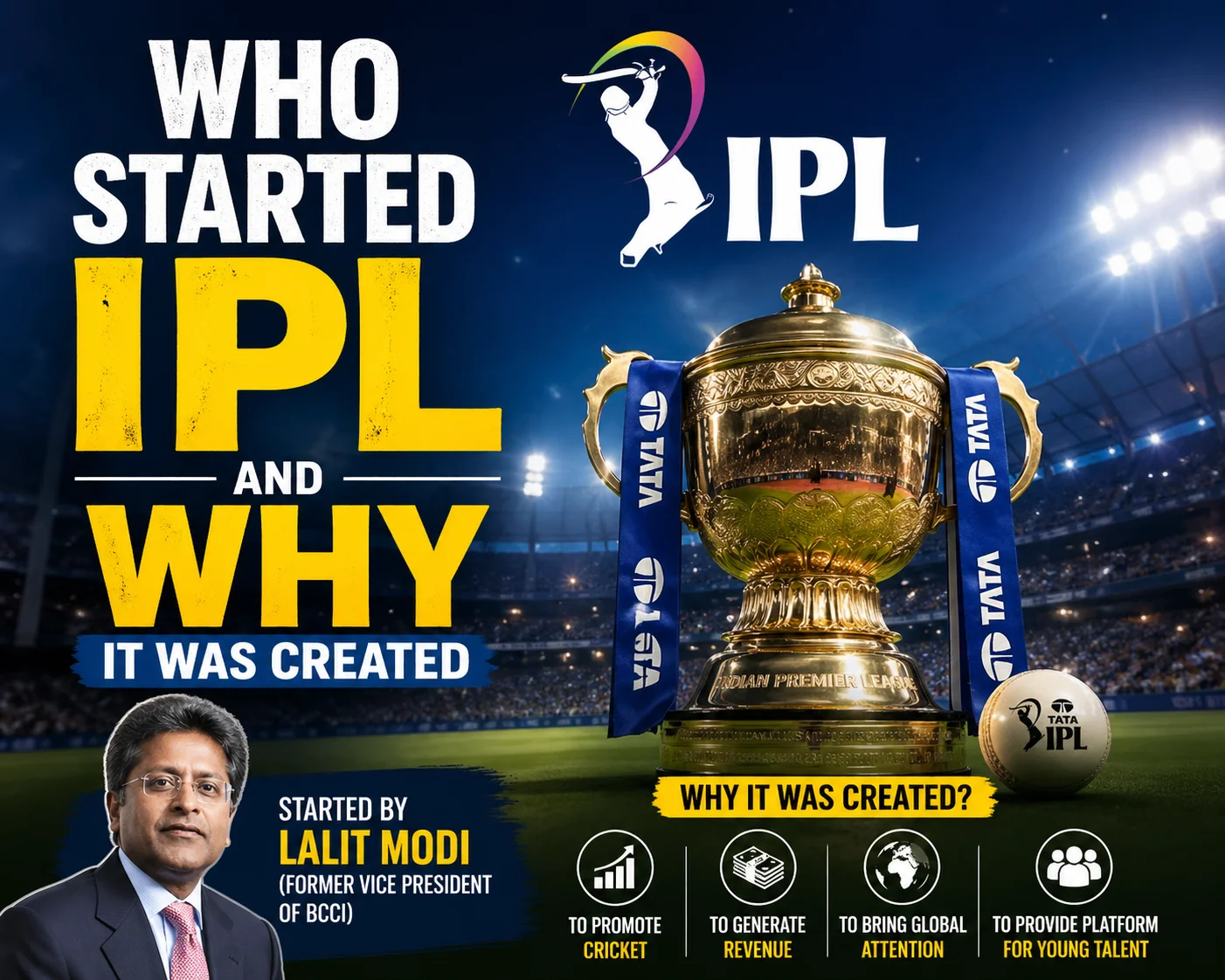
Who Started IPL and Why It Was Created
The Indian Premier League (IPL) is one of the biggest and most successful franchise-based T20 cricket leagues in the world today. Every year, millions of fans watch IPL matches across the globe.
However, many cricket fans still ask an important question:
Who started IPL and why was it created?
To understand the complete timeline of IPL’s launch and early development journey, read our detailed pillar guide here:
In this article, we explain:
- Who started IPL
- Why IPL was created
- The role of Lalit Modi
- How IPL changed world cricket forever
Who Started IPL?
The Indian Premier League (IPL) was officially started in 2008 by the Board of Control for Cricket in India (BCCI).
The main person behind the idea and execution of IPL was:
Lalit Modi (Former BCCI Vice President and IPL Founder-Chairman)
He designed a city-based franchise T20 league model inspired by international sports leagues like:
- NBA
- English Premier League
His vision helped transform cricket into a modern sports entertainment industry.
Why Was IPL Created?
IPL was created with several strategic goals that changed the future of cricket worldwide.
Let’s explore the major reasons behind its creation.
1. To Promote T20 Cricket in India
After India won the ICC T20 World Cup 2007, the popularity of T20 cricket increased rapidly among young audiences.
BCCI launched IPL in 2008 to:
- attract younger fans
- make cricket more entertaining
- increase match viewership
- modernize domestic cricket formats
This decision played a major role in making T20 cricket globally successful.
2. To Compete With the Indian Cricket League (ICL)
Before IPL launched, a private tournament called the Indian Cricket League (ICL) had already started attracting players.
BCCI introduced IPL to:
- maintain control over Indian cricket
- provide official opportunities to players
- prevent talent shifting to unofficial leagues
This strengthened BCCI’s authority in world cricket.
3. To Introduce the Franchise Cricket Model
One of the biggest innovations IPL introduced was city-based franchise teams.
Examples include:
- Mumbai Indians
- Chennai Super Kings
- Kolkata Knight Riders
- Rajasthan Royals
This model allowed businesses and celebrities to invest in cricket teams, turning IPL into a sports-business revolution.
4. To Generate Massive Revenue for Cricket
Another major reason behind IPL’s creation was financial growth.
IPL generates revenue through:
- broadcasting rights
- sponsorship deals
- franchise ownership
- ticket sales
- streaming platforms
- merchandise sales
Today, IPL is one of the richest cricket leagues in the world.
To explore how IPL became a global cricket powerhouse after its launch in 2008, read the complete timeline guide here:
5. To Provide Opportunities for Young Indian Players
Before IPL, domestic players had limited chances to showcase their talent internationally.
IPL created opportunities for young cricketers to play alongside global legends.
Players who became stars through IPL include:
- Jasprit Bumrah
- Hardik Pandya
- Ravindra Jadeja
- Ruturaj Gaikwad
Today, IPL is considered one of the best platforms for emerging cricket talent.
6. To Globalize Cricket Entertainment
IPL invited international players from:
- Australia
- England
- South Africa
- West Indies
- New Zealand
- Afghanistan
- Sri Lanka
This transformed IPL into a global cricket festival, not just a domestic Indian league.
Millions of viewers now watch IPL matches worldwide every season.
Role of Lalit Modi in IPL’s Creation
Although IPL is governed by BCCI, Lalit Modi played a historic role in its creation.
His contributions included:
- designing the franchise structure
- introducing the player auction system
- securing broadcasting partnerships
- creating entertainment-focused match presentation
- promoting IPL as a global sports brand
His leadership helped IPL become the world’s most successful T20 league.
How IPL Changed Modern Cricket Forever
IPL completely transformed cricket in several major ways.
Financial Revolution in Cricket
IPL significantly increased cricket revenue worldwide.
Player Career Growth Opportunities
Players now earn through:
- league contracts
- sponsorship deals
- endorsements
This changed the economics of modern cricket careers.
Inspiration for Global T20 Leagues
After IPL’s success, many countries launched their own franchise leagues such as:
- Pakistan Super League (PSL)
- Big Bash League (BBL)
- Caribbean Premier League (CPL)
- SA20 League
- The Hundred (England)
IPL became the blueprint for modern franchise cricket leagues worldwide.
Conclusion
The Indian Premier League (IPL) was started in 2008 by BCCI under the leadership of Lalit Modi to promote T20 cricket, strengthen cricket governance, generate revenue, and transform cricket into a global entertainment sport.
Today, IPL is not just a cricket tournament — it is one of the biggest sporting brands in the world.
For a complete timeline of IPL’s origin story, early seasons, and major milestones, read our detailed pillar article here: